Overview
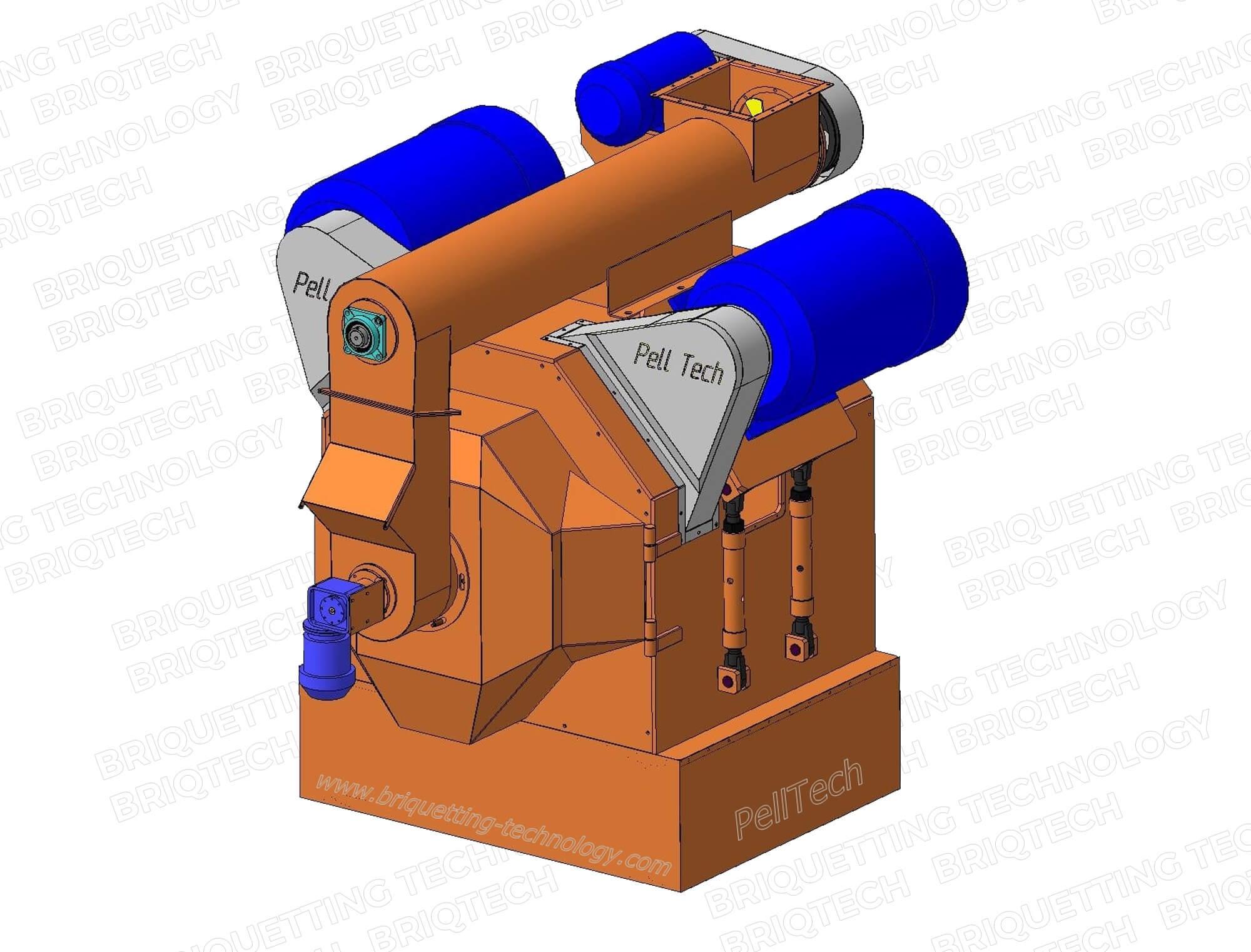
Rapeseed-Straw-Sawdust Pellet Press GRD-0.8 is designed for the production of biomass pellets, offering efficiency and reliability in operation.
Rapeseed-Sawdust-Straw Pellet Press Series "PellTech" model: GRD-0.8 Ring die
Technical Features:
Pellet productivity up to: 400 - 800 kg/hour depending on the raw material and die hole diameter.
Optional productivity for feed pellets up to: 800 - 1000 kg/hour depending on the raw material and die hole diameter.
Pellet - granule diameter: 6 - 8 mm
Inner diameter of the ring die: 350 mm
Adjustable pellet length: 15 - 60 mm
Main electric motor - 2 X 30 kW / 2 X 37 kW
Mixing electric motor - 3 kW
Total installed power - 70/85 kW
Three-phase current - 400V, coil voltage 24V/230V within +/- 5%, frequency 50 Hz
Length: 4730 mm
Width: 2795 mm
Height: 3442 mm
Weight: 3000 kg
Raw material moisture content: 12-14-16% - moisture affects the quality and productivity of pellets
Raw material size: 3 - 5 mm
Pellet density at the exit from the pellet press up to 1250 kg/m3
Bulk density in Big-Bags up to 700 kg/m3
Type of raw material: wood sawdust*(70% hardwood and 30% softwood, dextrin 1.0-1.5%), cereal straw, cereals, rapeseed, alfalfa, feed, other biomass waste, manure, and other compostable agricultural waste.
Each raw material has different cone shapes and sizes at the ring die
The pellet production press consists of:
- Pellet press
- Ring die with 2 rollers - recommended use of Total Ceran XM460 grease
- Automated lubrication system
- Mixing screw with raw material humidification system
- Control panel and electrical control, soft starter, with 10-meter three-phase cable
Optional accessories for the pellet press - granulator:
Steam generator
Rollers, pellet dies 6-10 mm - Germany, GRAF, SALMATEC, Italy, Hungary
Frequency converter
Hopper (Silo) for homogenizing dry raw material for the pellet press from 1.8 - 5m/cubes
Feeding conveyor for raw material controlled by a frequency converter
Automated and semi-automated bagging
Conclusion
Rapeseed-Straw-Sawdust Pellet Press GRD-0.8 represents a practical solution for utilizing biomass into eco-friendly fuel, with optimized efficiency and costs.